Personalization has become one of the defining trends in modern digital marketing. Customers increasingly expect brands to understand their interests, anticipate their needs, and deliver relevant experiences across websites, social media, email, search, and advertising platforms. Generic campaigns can still reach large audiences, but increasingly sophisticated data and artificial intelligence are making it possible to create campaigns that are far more relevant to individual customers and specific audience segments.
The future of personalization is moving beyond simply adding a customer's name to an email. Hyper-targeted marketing uses customer data, behavioural signals, artificial intelligence, automation, and contextual information to deliver more relevant messages to the right audiences at the right moments.
For businesses competing in an increasingly crowded digital environment, this approach can help improve customer engagement, strengthen brand relationships, and make marketing activity more relevant and measurable.
What Is Hyper-Targeted Marketing?

Hyper-targeted marketing is an advanced form of personalization that uses multiple data points to create highly specific audience segments and tailor marketing messages to their interests, behaviours, needs, or stage in the customer journey.
Traditional segmentation might divide an audience according to broad characteristics such as age, location, or gender. Hyper-targeting can go much further by considering factors such as:
- Browsing and website behaviour
- Previous purchases and interactions
- Content engagement
- Search intent
- Geographic location
- Device and channel preferences
- Customer lifecycle stage
- Responses to previous campaigns
- Products or services viewed
- Interactions with social media content
When these signals are combined responsibly, marketers can build more detailed audience profiles and create campaigns that are designed around specific customer needs rather than broad assumptions.
Why Personalization Is Becoming More Important
The digital customer journey has become increasingly fragmented. A potential customer may discover a brand through Google, watch a video on social media, visit the website several times, read reviews, subscribe to an email list, and eventually make a purchase through a different device.
Each interaction provides an opportunity to understand what the customer is looking for.
At the same time, customers are exposed to an enormous volume of digital content every day. Relevant experiences can help brands stand out by reducing the amount of irrelevant information audiences have to navigate.
Personalization can also help businesses use marketing budgets more efficiently. Instead of delivering exactly the same message to every potential customer, marketers can adapt creative content, offers, channels, and timing according to audience behaviour and campaign objectives.
The Role of AI in the Future of Personalization
Artificial intelligence is accelerating the development of personalized marketing. Modern AI systems can process large volumes of information, identify behavioural patterns, generate content variations, and support marketers in making faster decisions.
AI can contribute to personalization in several areas, including:
- Audience analysis: identifying behavioural patterns and meaningful customer segments.
- Predictive marketing: identifying signals that may indicate future customer actions.
- Content personalization: adapting messaging and creative assets for different audiences.
- Recommendation systems: suggesting relevant products, services, or content.
- Automated campaigns: triggering communications based on customer interactions.
- Campaign optimization: helping marketers analyse performance and adjust campaigns.
However, AI should support a clear marketing strategy rather than replace one. The quality of personalization depends on the quality of the data, audience understanding, creative strategy, and customer experience behind it.
Build a Strong First-Party Data Strategy
Effective personalization begins with reliable customer information. First-party data collected directly through a company's own channels can provide valuable insights while giving businesses greater control over how customer information is managed.
Potential sources include website interactions, CRM systems, email subscriptions, purchase histories, customer enquiries, loyalty programmes, and other consent-based interactions.
The objective is not simply to collect as much data as possible. Businesses should identify which information is genuinely useful for improving the customer experience and ensure that it is collected and managed responsibly.
Move Beyond Basic Demographic Segmentation
Demographic segmentation can provide a useful starting point, but it does not always explain why someone is interested in a product or service.
Behavioural and intent-based segmentation can provide a more detailed understanding of an audience. For example, a digital marketing campaign could distinguish between:
- A visitor discovering a brand for the first time
- A visitor repeatedly researching a particular service
- A previous customer considering another purchase
- A customer who has engaged with specific educational content
- A user who has abandoned a conversion process
Each audience may require a different message, creative approach, and call to action.
Use Customer Journey Data
Personalization becomes more effective when it reflects where a customer is in the buying journey.
A person who has never encountered a brand may need educational content explaining a problem or introducing the company's expertise. Someone who has already visited a service page may respond better to detailed information, testimonials, case studies, or a clear conversion opportunity.
Mapping the customer journey allows marketers to create different messages for different stages, including awareness, consideration, conversion, retention, and advocacy.
Create Dynamic Content Experiences
Personalization does not have to be limited to advertising. Websites, landing pages, emails, and social media campaigns can all be adapted to different audience groups.
Dynamic content can allow businesses to present different headlines, imagery, recommendations, offers, or calls to action based on relevant audience characteristics and interactions.
For example, an international business may adapt website content according to language or location, while an e-commerce company may highlight products related to a visitor's previous interests.
The goal should be to make the experience feel more relevant without making customers feel that their privacy has been compromised.
Combine Personalization With Creative Strategy
Data can tell marketers who they are reaching and what those audiences are doing. Creative strategy determines how the brand communicates with them.
Hyper-targeted campaigns should therefore combine data analysis with strong creative concepts. Different audience segments may respond to different benefits, emotional triggers, visuals, formats, or storytelling approaches while still maintaining a consistent brand identity.
This is particularly important for social media advertising, where creative quality can have a significant influence on whether an audience stops scrolling and engages with a message.
Personalize Across Multiple Channels
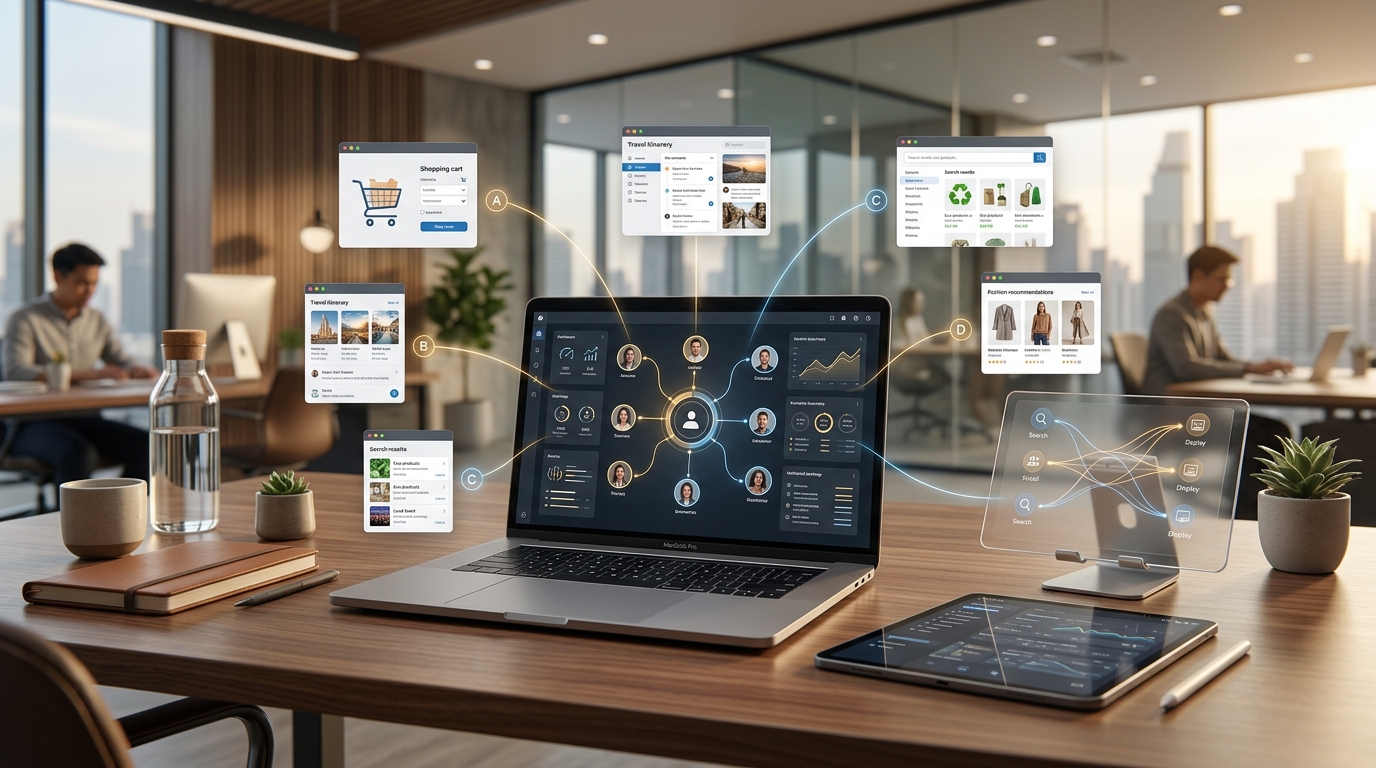
Customers rarely interact with brands through a single channel. A successful personalization strategy should consider how different touchpoints work together.
A campaign might combine:
- Search engine marketing
- Social media advertising
- Email marketing
- Content marketing
- Website personalization
- Remarketing
- Marketing automation
Instead of treating every channel as a separate activity, marketers can develop a connected customer journey in which messages and experiences complement one another.
Use Predictive Insights Carefully
Predictive analytics can help marketers identify patterns that may indicate future behaviour. For example, data analysis can help identify audiences that show stronger engagement with particular products, services, or content.
These insights can support decisions about audience targeting, campaign timing, content recommendations, and customer retention.
However, predictions should be treated as signals rather than absolute conclusions. Customer behaviour can change, and marketing teams should continuously test their assumptions against real campaign results.
Test and Refine Every Campaign
Hyper-targeting does not mean creating one perfect campaign and leaving it unchanged. Personalization works best as an ongoing process of testing, learning, and optimization.
Marketers can test different combinations of:
- Audience segments
- Messages
- Images and videos
- Offers
- Landing pages
- Calls to action
- Campaign timing
- Advertising channels
Performance data can then be used to refine future campaigns. This creates a continuous feedback loop in which marketing becomes increasingly informed by actual customer behaviour.
Privacy Must Remain Part of the Strategy
The future of personalization is not simply about collecting more information. It is also about using customer data responsibly.
Businesses need to consider applicable privacy and data protection requirements when collecting, storing, analysing, and using personal information. Transparency, appropriate consent or other lawful bases where required, responsible data management, and clear privacy practices should form part of the personalization strategy from the beginning.
Trust is particularly important because overly intrusive personalization can have the opposite effect from what marketers intend. A campaign should feel useful and relevant rather than uncomfortable or unnecessarily invasive.
From Mass Marketing to Individualized Experiences
The evolution of personalization can be viewed as a progression:
- Mass marketing: one message for a broad audience.
- Segmentation: different messages for defined audience groups.
- Personalization: content adapted to individual customer characteristics and interactions.
- Hyper-personalization: real-time experiences informed by multiple behavioural and contextual signals.
As technology continues to develop, the distinction between marketing campaign and customer experience is becoming less pronounced. Advertising, website content, email, social media, and customer service can increasingly work together as parts of one connected experience.
What the Future of Personalization Could Look Like
The next generation of personalized marketing is likely to become increasingly automated, predictive, and context-aware. AI can help marketers analyse complex customer journeys and generate multiple content variations, while automation can deliver relevant experiences at different stages of the customer lifecycle.
At the same time, successful brands will need to balance technological capability with human creativity. The ability to understand culture, emotions, brand identity, and customer motivations remains essential.
The future is therefore not simply about creating more personalized advertisements. It is about creating more relevant and useful digital experiences across the entire customer journey.
How Pimclick Can Help Build Personalized Digital Campaigns
At Pimclick, we combine creative thinking, digital marketing expertise, social media, web design, content, and technology to help businesses build stronger digital experiences.
Since 2002, our Bangkok-based agency has worked across the digital spectrum, developing creative strategies that connect brands with their audiences across multiple channels.
From audience strategy and content creation to social media campaigns, website development, SEO, digital advertising, and data-informed optimization, personalization can be integrated into different stages of a brand's digital strategy.
The future of marketing is becoming increasingly personalized, but effective personalization starts with understanding the customer. By combining reliable data, thoughtful segmentation, AI-powered tools, compelling creative work, and responsible data practices, businesses can create campaigns that are more relevant without losing the human side of marketing.
Ready to make your digital marketing more targeted and relevant? Pimclick can help you develop a creative digital strategy designed around your audiences, objectives, and customer journey.