
As search engines continue to evolve, the signals that determine online visibility are becoming more advanced and interconnected. In 2026, SEO is no longer only about keywords, backlinks, or technical optimization—it is about demonstrating expertise, trust, relevance, and real value across every aspect of the user journey.
Search engines increasingly rely on artificial intelligence, machine learning, and advanced language models to understand content quality, user intent, and website credibility. Understanding these ranking signals allows businesses and content creators to focus on strategies that improve rankings, visibility, engagement, and long-term organic growth.
Understanding Search Engine Signals

Search engine signals are the indicators used by algorithms to evaluate the quality, relevance, authority, and usability of a website. These signals help search engines determine which content best answers a user's query.
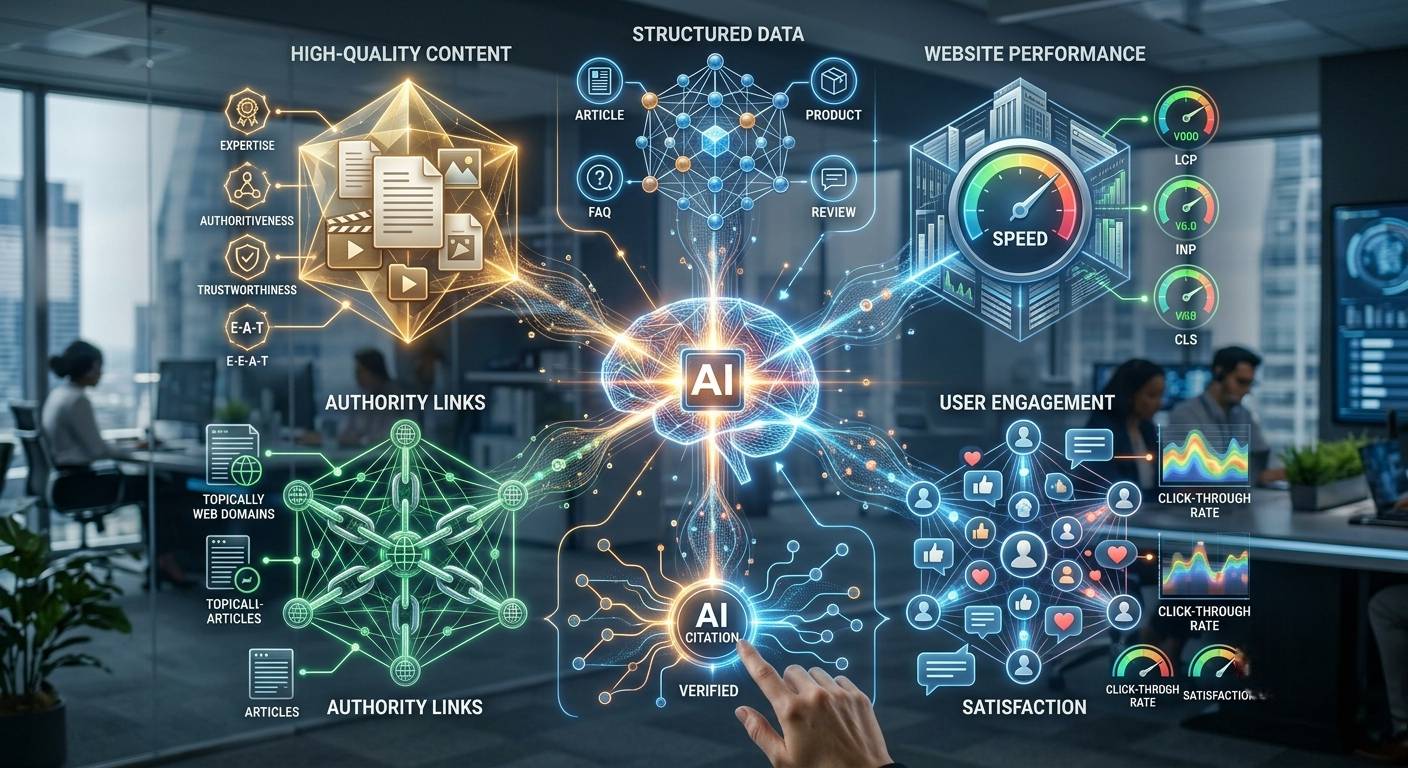
In 2026, ranking signals can be grouped into four main categories:
- Content signals: Content quality, topical depth, originality, expertise, and alignment with user intent.
- Technical signals: Website performance, mobile optimization, structured data, security, crawlability, and accessibility.
- User experience signals: Engagement behavior, satisfaction signals, navigation quality, and interaction patterns.
- Authority and trust signals: Brand reputation, expert recognition, digital presence, and trustworthy references.
With AI-powered search systems becoming more sophisticated, search engines are no longer simply matching keywords—they are evaluating meaning, context, relationships between topics, and the overall usefulness of information.
Content Quality and Relevance
High-quality content remains one of the strongest foundations of search visibility in 2026. Modern algorithms evaluate much more than keyword placement. They analyze:
- Depth and completeness: Content that provides detailed answers, practical solutions, and valuable insights is more likely to satisfy users and perform well.
- Original expertise: First-hand experience, unique perspectives, research, and expert knowledge help differentiate content from generic AI-generated information.
- Search intent alignment: Successful pages must understand why users search and provide the right information at the right stage, whether users are looking for knowledge, comparisons, or solutions.
- Topical authority: Websites that consistently publish valuable content around a specific subject can build stronger credibility and visibility.
- Content freshness and accuracy: Regular updates ensure information remains reliable, especially for industries affected by rapid changes.
In 2026, AI-powered ranking systems analyze concepts, entities, relationships, and context. Content that demonstrates expertise, experience, authority, and trust is increasingly favored over content created only to target keywords.
Technical SEO Signals
Technical SEO remains essential because search engines must efficiently access, understand, and evaluate websites. Important technical signals in 2026 include:
- Page performance: Fast-loading websites improve user satisfaction and support better search visibility.
- Mobile-first optimization: Since most searches happen on mobile devices, responsive design and mobile usability remain critical.
- Structured data and schema markup: Schema helps search engines understand content, products, services, reviews, organizations, and other entities more accurately.
- Website security: HTTPS continues to be an important trust factor for users and search engines.
- Crawlability and indexing: Well-structured sitemaps, optimized robots.txt files, clean URLs, and proper internal linking help search engines discover and index content.
- Accessibility and usability: Websites designed for all users provide better experiences and stronger quality signals.
A technically optimized website creates the foundation needed for content and authority strategies to succeed.
User Experience and Engagement Signals
User experience has become one of the most important areas of SEO in 2026. Search engines increasingly evaluate whether users are satisfied after visiting a page.
Important UX signals include:
- Click-through rate (CTR): Effective titles and descriptions improve the likelihood that users choose your result.
- Engagement and satisfaction: Search engines analyze whether visitors interact with content and find useful answers.
- Dwell time and user behavior: Longer meaningful interactions can indicate that content successfully meets user expectations.
- Navigation experience: Clear structures, intuitive menus, and strong internal linking help users discover relevant information.
- Core Web Vitals: Metrics related to loading performance, responsiveness, and visual stability remain important indicators of website quality.
A website that provides a smooth, valuable, and frustration-free experience sends stronger quality signals to both users and search engines.
Backlinks and Authority Signals
Backlinks continue to influence rankings in 2026, but search engines place greater emphasis on quality, relevance, and authenticity rather than the number of links.
Modern authority signals include:
- High-quality backlinks: Links from trusted, relevant websites provide stronger credibility.
- Contextual relevance: Links should naturally support related topics and provide value to users.
- Brand authority: Mentions, citations, reviews, and recognition across trusted platforms contribute to online reputation.
- Natural link growth: Authentic references are more valuable than artificial link-building practices.
A strong combination of valuable content, digital reputation, and trustworthy connections helps strengthen domain authority.
AI, Semantic Search, and Behavioral Signals
Artificial intelligence plays a central role in search experiences in 2026. Search engines increasingly understand users through context, behavior, and meaning rather than simple keyword matching.
- Semantic understanding: Search engines interpret concepts, relationships, and user needs beyond exact search terms.
- AI-generated search experiences: Content must be structured clearly so it can be understood and referenced within new AI-powered search formats.
- Personalization: Search results adapt based on factors such as location, device, preferences, and previous interactions.
- Predictive search behavior: Algorithms analyze trends and patterns to anticipate user needs.
- Entity recognition: Search engines increasingly evaluate connections between people, brands, places, products, and topics.
To succeed in 2026, businesses must create content that is accurate, well-structured, trustworthy, and genuinely helpful.
Conclusion
In 2026, search visibility depends on a combination of content excellence, technical performance, user experience, authority, and AI-driven understanding. Search engines are becoming better at identifying websites that provide real value rather than those that simply optimize for traditional ranking factors.
Businesses that focus on creating expert content, improving website performance, building trust, and delivering outstanding user experiences will be better positioned to achieve sustainable organic growth.
The future of SEO in 2026 is not about manipulating algorithms—it is about creating meaningful digital experiences that satisfy both users and intelligent search systems.