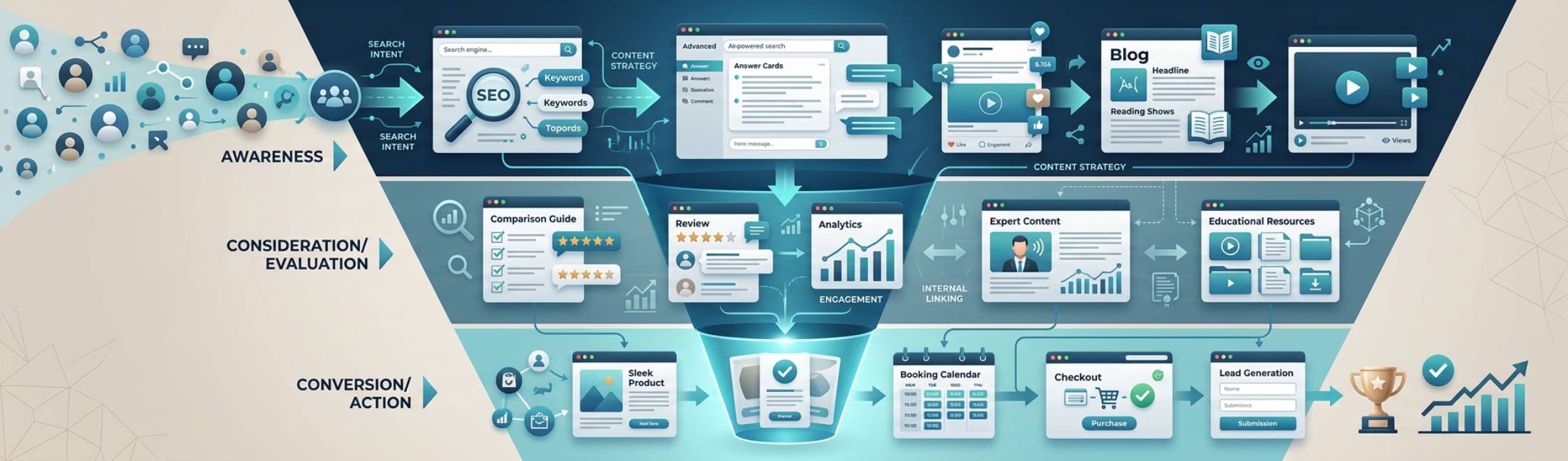
Driving qualified traffic to your website in 2026 requires more than publishing content—it demands a strategic, user-focused content funnel that guides people from discovery to action. With AI-powered search, evolving search behavior, and increasingly competitive digital channels, businesses need content that matches user intent at every stage of the customer journey.
A well-structured content funnel connects SEO, helpful content, AI search visibility, conversion optimization, and audience engagement to attract the right users, build trust, and turn visitors into qualified leads and loyal customers.
Understanding the Content Funnel
A content funnel maps the customer journey from initial discovery to conversion. While the traditional model includes three core stages, modern 2026 strategies increasingly recognize that users may move between stages multiple times before taking action.
The three primary stages are:
- Awareness Stage: Users are discovering a problem, need, question, or opportunity but may not yet be looking for a specific solution.
- Consideration Stage: Users are researching options, comparing solutions, and evaluating which approach, product, or provider best meets their needs.
- Decision Stage: Users are ready to take action, such as making a purchase, booking a service, subscribing, requesting a quote, or scheduling a demo.
In 2026, content should also support post-conversion engagement, encouraging customers to return, recommend your brand, leave reviews, and become long-term advocates.
Aligning content with each stage helps you meet users where they are, answer their questions, and provide the information they need to move forward.
Awareness Stage: Attracting the Right Audience
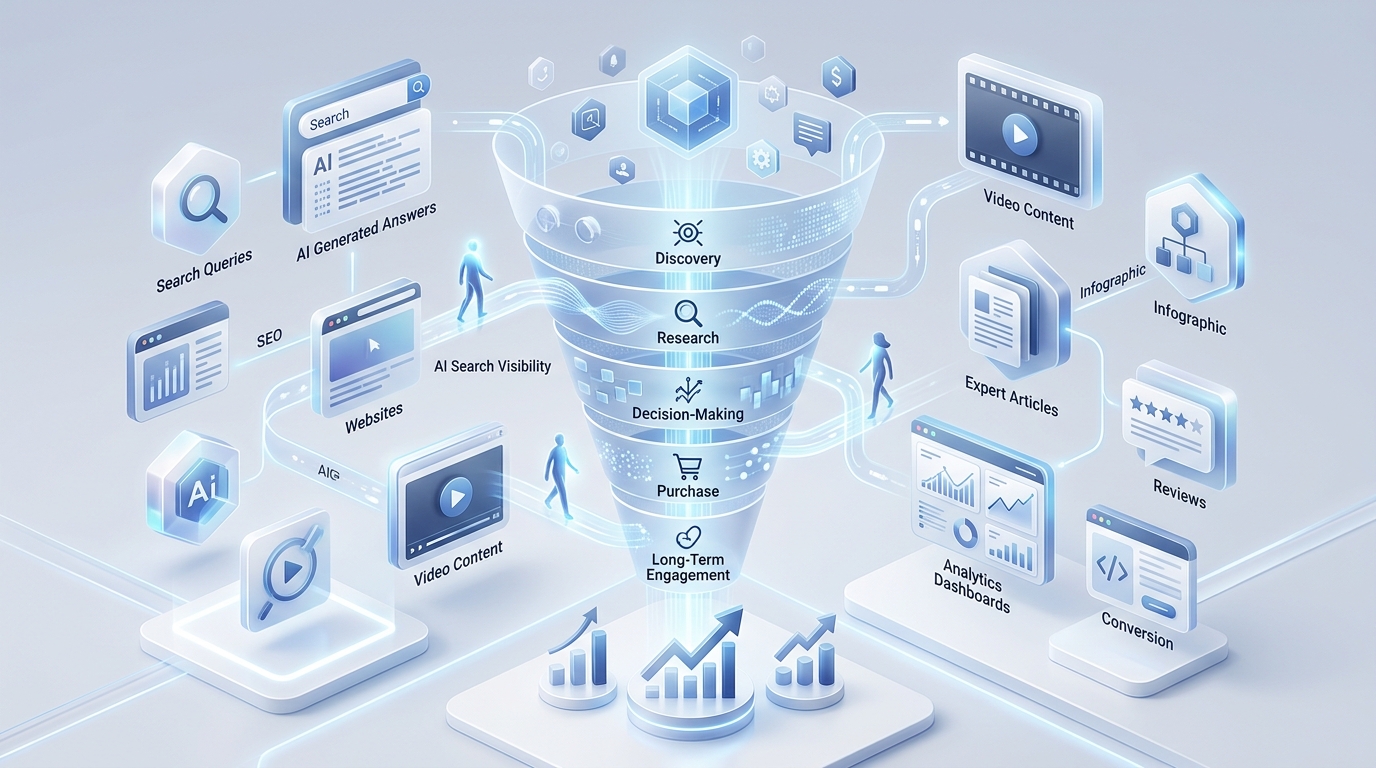
At the top of the funnel, content should focus on education, discovery, and problem awareness. The goal is not simply to generate as much traffic as possible, but to attract users who are genuinely relevant to your business.
Key strategies include:
- Educational blog posts and guides: Answer common questions, explain problems, and address audience pain points.
- AI-search-friendly content: Provide clear, structured answers that can be understood by both users and AI-powered search systems.
- Infographics, videos, and visual content: Make complex topics easier to understand and increase engagement.
- Informational SEO: Target topics and search queries that reflect early-stage user intent.
- Conversational and long-tail keywords: Address the natural questions users ask through search engines, voice assistants, and AI tools.
- Social media and digital PR: Expand content reach and introduce your brand to new audiences.
- Expert-led content: Demonstrate first-hand knowledge, experience, and credibility.
The goal at this stage is to capture attention and build awareness while attracting qualified visitors without immediately pushing them toward a sale.
Consideration Stage: Nurturing Interest and Building Trust
Once users understand their problem and begin exploring solutions, your content should position your brand as a credible and useful solution.
Effective tactics include:
- Case studies and success stories: Demonstrate real-world results and practical outcomes.
- Comparison guides and product reviews: Help users evaluate different options.
- Detailed service and product content: Explain features, benefits, use cases, and differentiators.
- Email campaigns and lead magnets: Capture qualified contacts and continue nurturing them.
- Webinars, videos, and expert content: Provide deeper insights and establish authority.
- FAQs and buying guides: Address objections and help users make informed decisions.
- Interactive tools and calculators: Give users practical value while helping them understand which solution fits their needs.
In 2026, trust is particularly important. Users can encounter information from brands, search engines, social platforms, and AI-generated answers within the same journey. Content should therefore demonstrate experience, expertise, credibility, and transparency.
The consideration stage is designed to educate, differentiate, and build confidence, preparing users for the decision stage.
Decision Stage: Driving Action
At the bottom of the funnel, content should focus on conversion and reducing friction. Users are closer to taking action, so they need clear information and strong reasons to choose your business.
This stage can include:
- Product and service pages: Clearly communicate benefits, features, pricing, availability, and value.
- High-converting landing pages: Match the page experience closely with the user's intent and expectations.
- Testimonials and customer reviews: Provide social proof and reduce uncertainty.
- Case studies and results: Reinforce the practical value of your offering.
- FAQs and objection-handling content: Address common concerns before conversion.
- Offers and incentives: Encourage action when appropriate without relying excessively on artificial urgency.
- Clear calls to action: Tell users exactly what to do next, whether that means booking, purchasing, subscribing, contacting, or requesting information.
- Frictionless user experience: Simplify forms, navigation, checkout processes, and mobile interactions.
The objective is to turn qualified interest into measurable action by providing confidence and removing unnecessary barriers.
Optimizing Content Funnels for SEO and AI Search in 2026
A successful content funnel in 2026 needs to go beyond traditional keyword optimization. Search is increasingly influenced by AI-powered results, conversational queries, semantic understanding, and user experience signals.
Key optimization strategies include:
- Search-intent alignment: Match content to the user's actual goal rather than focusing only on individual keywords.
- Topic clusters and semantic relevance: Build connected content around important subjects instead of creating isolated articles.
- Conversational search optimization: Answer natural-language questions clearly and directly.
- AI-search visibility: Structure content so important information is easy for search engines and AI systems to understand and interpret.
- Internal linking: Connect awareness, consideration, and decision-stage content through relevant contextual links.
- Technical SEO: Maintain strong crawlability, mobile performance, page speed, indexing, and site architecture.
- Structured content: Use descriptive headings, FAQs, lists, definitions, and clear sections to improve comprehension.
- First-hand expertise: Add original insights, examples, data, experiences, and evidence that provide value beyond generic information.
- Content freshness: Review and update important pages as search behavior, products, regulations, and industry information change.
- Conversion optimization: Ensure organic visitors have a clear and relevant next step once they arrive.
The goal is no longer simply to rank for keywords. A strong 2026 content strategy aims to become a useful source throughout the user's research and decision-making journey.
Measuring Funnel Effectiveness
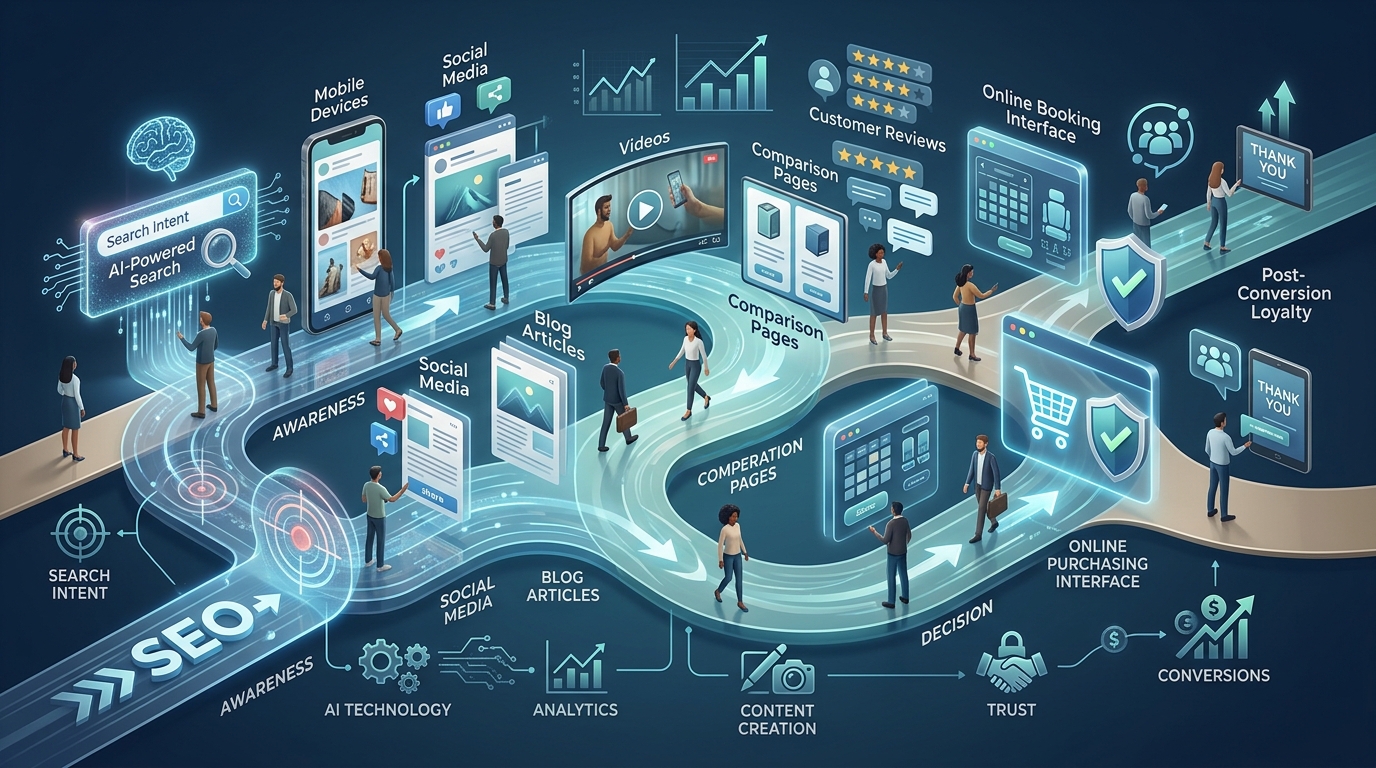
A content funnel should be measured according to business outcomes, not traffic alone.
Important metrics include:
- Organic traffic and engagement: Identify which content attracts and retains relevant visitors.
- Search visibility: Monitor rankings, impressions, featured results, and visibility across evolving search experiences.
- Engagement and journey progression: Determine whether users move from informational content toward consideration and conversion pages.
- Conversion rates: Measure how effectively content generates leads, bookings, purchases, subscriptions, or other desired actions.
- Lead quality: Evaluate whether generated leads match your target audience and are ready to take action.
- Assisted conversions: Identify content that contributes to conversions even when it is not the final page visited.
- Content ROI: Measure how content contributes to revenue, qualified leads, or other strategic goals.
- Customer retention and advocacy: Track repeat purchases, reviews, referrals, and ongoing engagement where relevant.
Regular analysis helps businesses identify content gaps, weak funnel stages, and opportunities for optimization.
The Future of Content Funnels in 2026
The modern content funnel is becoming less linear. Users may discover a brand through an AI-generated answer, visit a website, compare competitors, return through a search engine, watch a video, read reviews, and finally convert through a product or service page.
This means businesses should build connected content ecosystems rather than isolated pieces of content.
Each page should answer a specific user need while creating a natural pathway toward the next relevant step. Awareness content should introduce problems and opportunities, consideration content should build trust and demonstrate expertise, and decision content should make conversion simple.
Businesses should also consider what happens after conversion. Customer guides, onboarding content, support resources, loyalty content, and review-generation strategies can turn customers into repeat buyers and brand advocates.
Conclusion
Content funnels remain essential for turning website visitors into qualified leads and customers in 2026. However, successful funnels now require more than the traditional awareness, consideration, and decision framework.
By combining search intent, helpful content, AI-search optimization, topical authority, internal linking, strong user experience, and conversion-focused design, businesses can attract the right audience and guide them through a more complex customer journey.
In 2026, digital marketing success is not about generating the highest volume of traffic. It is about creating strategic content that answers real questions, demonstrates expertise, builds trust, appears across evolving search experiences, and moves qualified users toward meaningful action.